
By Rosemarie Jacob
Subjugating women in the name of religion is a tale as old as time. Countless books have been written on the topic in a variety of formats, ranging from fiction novels about characters living in oppressive societies to autobiographies from women who escaped religious cults. Books about the Abrahamic faiths of Christianity, Islam and Judaism have similar themes throughout, and tend to make clear that it is often not religion that is the problem, but rather the people in the world who use it to viciously control women and keep them powerless.
Sometimes the bestseller lists are not everyone’s cup of tea, but that is the best part about books. Unless you live in a ban-happy place like Texas or Florida, the beauty of reading lies in the sea of options available for every interest, no matter how niche. Here are some great books about women growing up in hyper-religious environments.
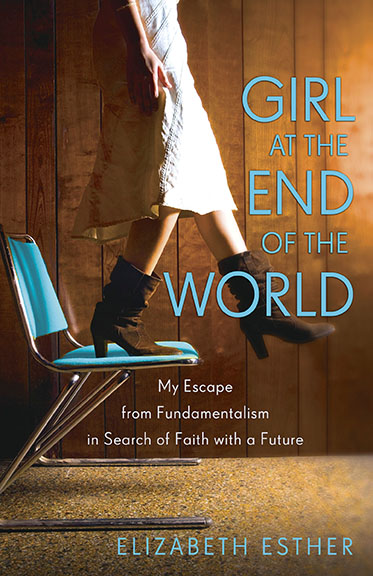
“Girl at the End of the World,” by Elizabeth Esther
This memoir chronicles the author’s childhood growing up in a cult ruled by Christian fundamentalists. It is difficult to read through her tales of being spanked into submission, the multiple attempts to break her down so as to build her back up in the desired mold, and the proselytizing she was made to do from a young age, publicly telling people that God loved them while privately being convinced that He hated her. Her path to leaving the fold was difficult, but led her to a life free from the unchecked demands of her parents and pastor. This story is excellently written, but fraught with details of religious abuse and trauma. Esther wrote another novel, “Spiritual Sobriety,” that discusses her recovery from this trauma and how she survives the scars it left behind.
“A Thousand Splendid Suns,” by Khaled Hosseini
This is Khaled Hosseini’s second critically-acclaimed story, published after the resounding success of “The Kite Runner,” his beloved debut novel. “A Thousand Splendid Suns” tells the stories of Mariam and Laila, two women that are brought together by tragedy during the Taliban’s rise in Kabul. It follows them from birth into adulthood, with the reader watching these women, once strangers and adversaries, as they grow to depend on each other for comfort in a place women are not allowed to dance, sing, wear makeup, attend school, speak unless spoken to, or go out without a male chaperone – supposedly all in the name of Islam. The sacrifices these women are forced to make are heartbreaking, but the beautiful bond that develops between them provides the strength to endure.

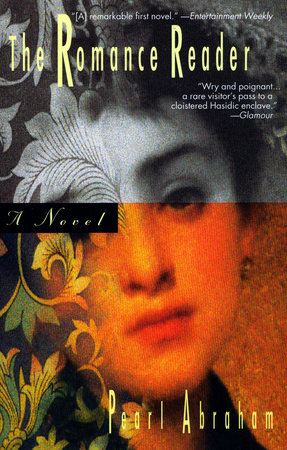
“The Romance Reader,” by Pearl Abraham
Rachel is growing up in an ultra-Orthodox Jewish community, an insular group of Jewish-Americans with strict rules on how men and women should behave. Although her family gives a relatively large amount of freedom to Rachel and her sister, both of whom tend to go against the grain, Rachel still feels she is being held back by the rules of her enclave. The word “goy” is utilized quite frequently, a Hebrew term used to describe non-Jews, but sometimes utilized disparagingly in reference to the worldly items that are not in line with Jewish doctrine. Rachel gets scolded for wanting to wear tights without seams or even for desiring a library card to read some goy-ish books. Every slight deviance from the rules spreads as gossip in the community like wildfire, causing more strife between her and her family. “The Romance Reader” does not have the kind of abuse that is unfortunately all too common in many stories of people leaving their religion; it instead shows a softer side to oppression, where one can be surrounded by a loving family but still feel their true selves stifled by the rules that dictate their lives.
“The Book of Essie,” by Meghan MacLean Weir
This story follows the life of Esther Anne Hicks, a high school girl whose family is famous for their TV show, “Six For Hicks.” The show chronicles the Hicks family’s life under their famous pastor father as well as their mother, Celia Hicks, who rules the roost behind the cameras. Essie navigates her final year of high school while finding herself in a terrifying situation, the solution to which comes to her in the form of Roarke Richards. Roarke despises the Hicks family but finds himself caught up in Essie’s plans, all the while learning of the skeletons hidden in their closets. This story depicts the horrors women face under legalistic Christianity and the illusions presented by reality television, even from the most pious of subjects.

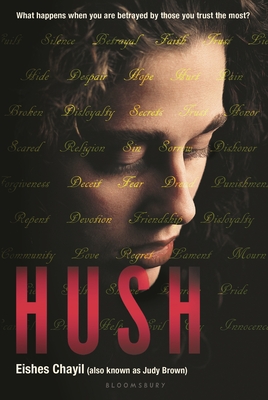
“Hush,” by Eishes Chayil
Written under the pseudonym Eishes Chayil, a Hebrew phrase referring to a woman of valor, this story follows the life of Gittel, a young girl growing up in a Hasidic Jewish enclave in Borough Park, Brooklyn. Her happy childhood with her friend Devory takes a dark turn when she learns that Devory is hiding a horrible secret. This secret haunts Gittel into adulthood, and she works to disentangle the truth and get justice for those like Devory. The reader gets an unlikely glimpse into this normally closed-off world and the lengths the community will go to protect themselves.
The wonderful writing in these books combined with their gripping plots and characters make for truly engaging reading experiences. Every single story delves into the mind of its protagonist and lets the reader evolve alongside her. It is also heartwarming to see that many of the characters continue to carry God with them, even after growing out of the warped, suffocating version of religion that they were raised in. These books are must-reads for anyone interested in the topic of religions and the many ways they can be twisted to hurt those they are meant to protect.
 all Platts now
Leave a comment